By Chef Alexis Hernandez
The sandwich I thought I wanted
In high school, I thought a good sandwich had to be big.
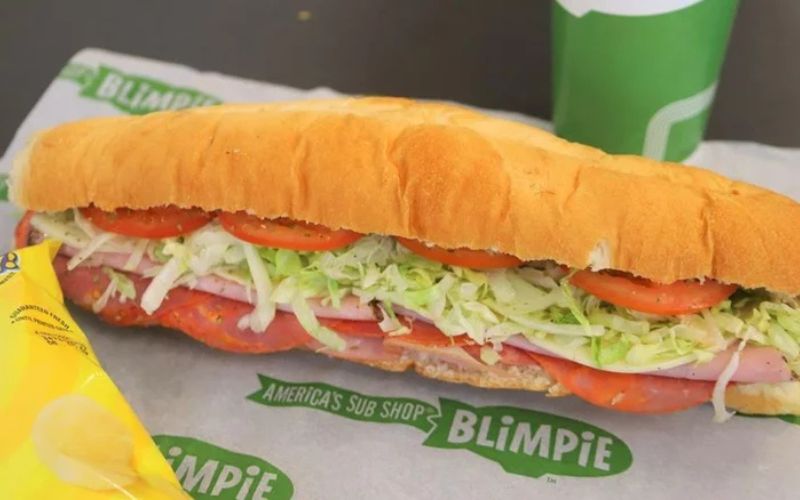
When Blimpie opened near Bergenline Avenue, it felt like a big deal. I’d save money so I could go once a week after school and order a half sub stacked with ham, salami, cheese, shredded lettuce, and that splash of vinegar they put on the bread.
It was nothing like the one-dollar bodega sandwiches—the corner store kind—across the street from my high school.
Blimpie felt new. It felt current.
And it made me believe a sandwich had to be loaded to be good.
What “more” looked like back then
I ordered the same way every time.
I liked the weight of it. I liked the mess. I liked that it felt like you got your money’s worth.
That’s what I wanted then.
A sandwich that looked like lunch.
The baguette that changed the rule
Then I went to Paris in my thirties and learned a different standard.
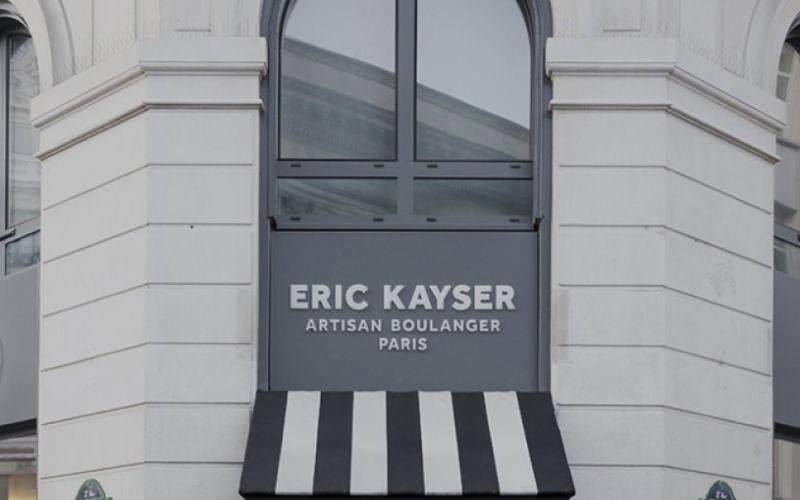
One morning in the Latin Quarter near Rue Monge, we stopped at Maison Kayser. The shop smelled like bread and butter and pastry trays moving in the back.
People ordered quickly in French. I recognized almost none of it.
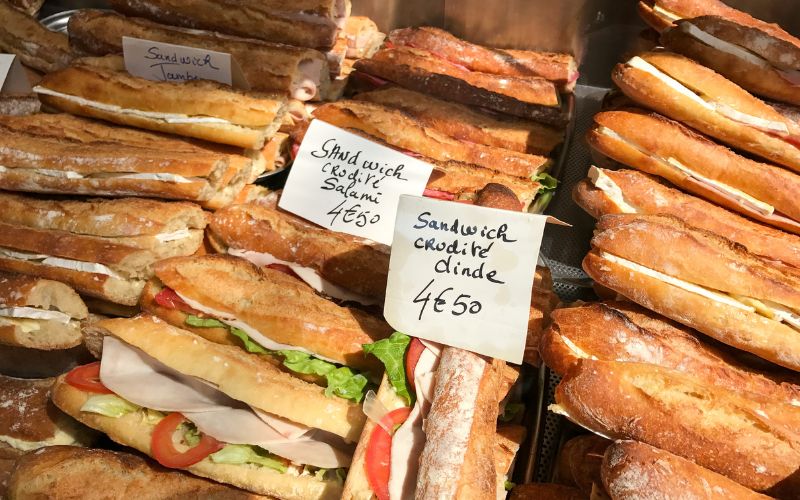
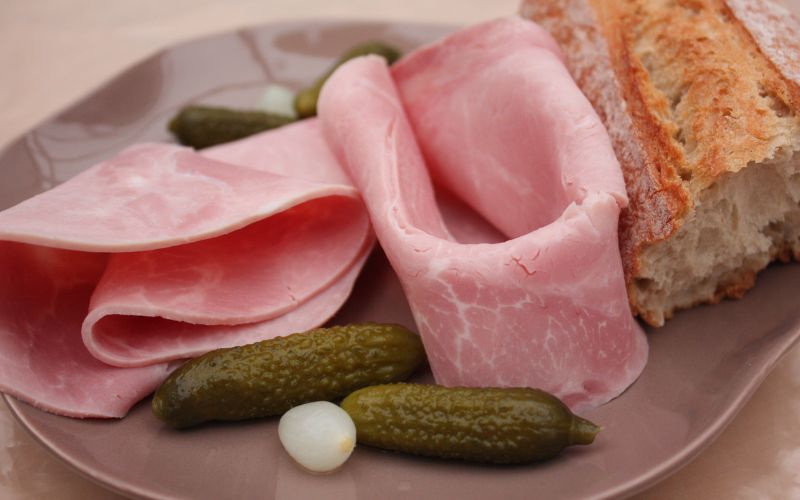
Behind the glass, I saw something almost too simple.
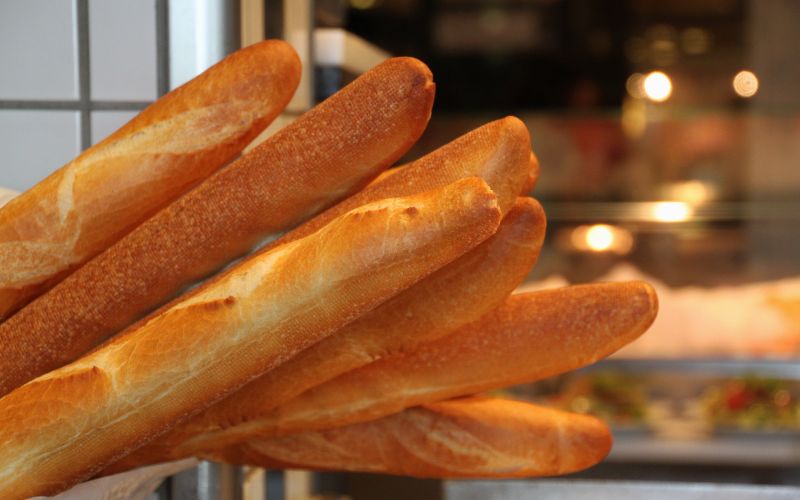
A baguette.
Ham.
Butter.
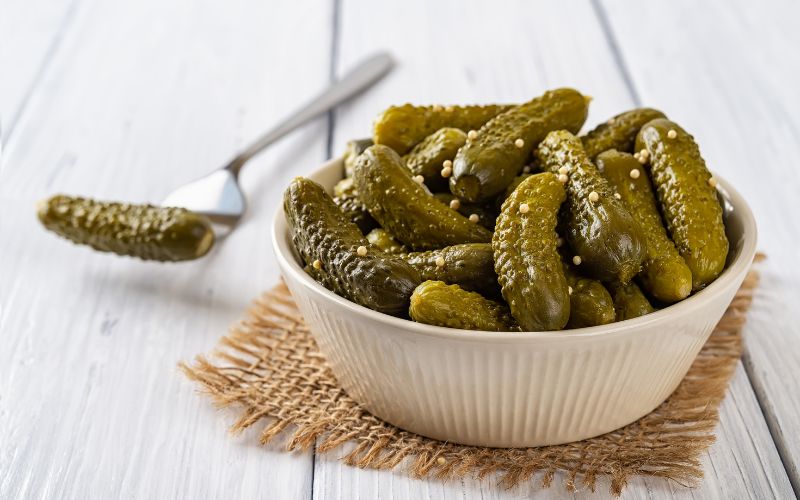
Cornichons.
No lettuce. No pile. No mayo.
I bought one anyway, slid it into my bag between my poncho, my umbrella, and two bottles of water, and kept walking.
The butter was the point
I didn’t eat it sitting down.
That was the whole point. We didn’t want to stop. We wanted to keep moving and keep seeing the city.
Later, in Montmartre, I pulled it out while we walked. I had my Canon in my hand, ready to grab a shot, and there was flour dust from the baguette on my fingers.
This is lunch, I remember thinking. And we’re not even pausing.
Then I took a bite and realized there was no mayo at all.
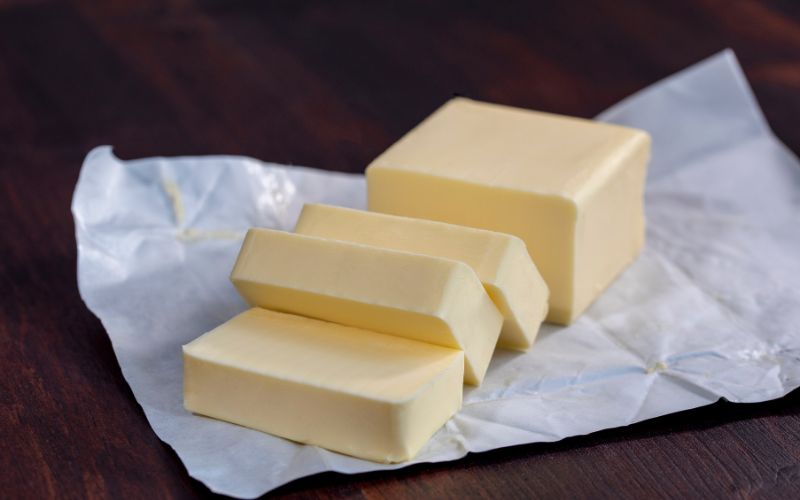
Just butter.
Grassy, cultured butter with real flavor—the kind I wasn’t used to at home, where mayonnaise usually does the heavy lifting.
The butter had softened as I walked. Not melted. Just spreadable.
It coated the bread, carried the ham, and made the cornichons taste sharper.
Even the bites that were mostly bread and butter were good.
Good, period.
Why the ham butter baguette works
In high school, the point was volume.
In Paris, the point was restraint.
One good slice of ham, folded.
Butter spread edge to edge.
Cornichons to cut through the richness.
Nothing was hidden. Nothing was dressed up.
The sandwich didn’t feel small.
It felt finished.
The part that became a routine
After the first one, I started buying one in the morning on purpose.
I liked having it with me. I liked not having to plan lunch. I liked not losing an hour to a table when I wanted the city.
It was practical.
It also felt like a quiet flex. Not because it was fancy.
Because it was good.
What it taught me
That sandwich taught me something I still use.
Food doesn’t have to be loaded to be satisfying.
Sometimes “more” is just more.
Better bread. Better butter. Better ham.
When those are right, you don’t need much else.
I’ve always had a soft spot for food that doesn’t ask anything of you—the kind that holds you up without demanding a performance.
This sandwich did that for me in Paris.
What I still make at home
Even now, I’ll make my own version at home.
Good bread.
Softened butter.
Ham folded once so it has some height.
Cornichons if I have them.
That’s it.
I still love a big sandwich.
I just don’t need it to earn its place anymore.
Chef Alexis Hernandez writes The Other Side of the Stove. His work has also appeared in News of Sun City Center, and he has appeared on Food Network Star and Cutthroat Kitchen.