Once trust shifts, you start reading labels differently. You start asking who is responsible for proving something is safe. You start noticing how often “safe” gets treated like a settled question when it’s really an ongoing process.
So what are the chef tips for food safety at home. What are we actually trusting here.
The end of “trust us” is now official
This month, the FDA announced it is launching an assessment of BHA, a food preservative that has been around long enough to feel invisible.
In that same announcement, HHS Secretary Robert F. Kennedy Jr. said, “This reassessment marks the end of the ‘trust us’ era in food safety.”
That sentence matters because it describes the moment we’re in.
Not “everything is dangerous.”
More like: the old default, that something is fine because it’s been used for years, is no longer good enough.
The FDA is also blunt about why BHA is on the table. The agency notes it has remained in the food supply for decades, even as the National Toxicology Program has identified it as “reasonably anticipated to be a human carcinogen” based on animal studies.
This is what modern oversight looks like. A reassessment. New data. Updated standards. More scrutiny after the fact.
And it’s not just one chemical. It’s a signal that the “we decided this years ago” era is getting audited.
GRAS is not a kitchen word, but it matters
Most home cooks never need to know what GRAS means.
GRAS stands for generally recognized as safe. It’s the classification that shows up behind the scenes when ingredients get treated as acceptable before most people even notice they exist.
Right now, that system is back in the spotlight. Reuters reported that Kennedy told CBS, “We will act on David Kessler’s petition,” referring to a request to remove corn syrup and dozens of other sweeteners and starches from the GRAS list unless safety can be proven.
Again, politics aside, the practical question is simple.
Who has to prove something is safe?
And when?
Here’s the part that matters for the future, and it’s not a talking point. It’s in the FDA’s own 2026 priorities. The Human Foods Program says that in 2026 it will publish a proposed regulation to require submission to FDA of GRAS notices for all new substances claimed to be GRAS.
If that happens, it is a shift from “trust us, we looked at it” to “show us.”
The calm part people miss
When you start writing about safety, it’s easy to accidentally sound like a warning label.
I don’t want that tone.
The FDA’s microplastics page includes a sentence that should keep everyone grounded: “Current scientific evidence does not demonstrate that levels of microplastics or nanoplastics detected in foods pose a risk to human health.”
That’s not the agency dismissing the topic. It’s the agency naming the current state of the science.
This is how you stay calm while staying aware of what is happening in the food sphere. You can take the scrutiny seriously without turning dinner into panic.
What this means from the other side of the stove
When regulators talk about reassessments and exposure data, I translate it into three things kitchens understand immediately:
More testing and more documentation.
We should want more pressure on brands that can’t explain their supply chain or their ingredient decisions.
And yes, in the long run, that can change what shows up in the grocery store and how it gets priced.
But in the short run, it changes something simpler. How you choose.
What cooks do with this
I don’t want people eating scared.
What I want is people eating aware.
I still cook the same way I always have but now I read a little more closely now.
That means I pay attention to ingredient panels on the things that quietly sneak into your week: snacks, sauces, cereals, convenience meals. I rotate my shortcuts instead of living on the same ones. I buy from companies that are not allergic to transparency.
Not because I’m trying to be perfect.
Because “safe” is not a slogan. It’s a system. And systems change.
A calm way to end this
The change isn’t that food suddenly became scary.
The change is that trust isn’t automatic anymore and frankly that is the scary part.




The trust shift
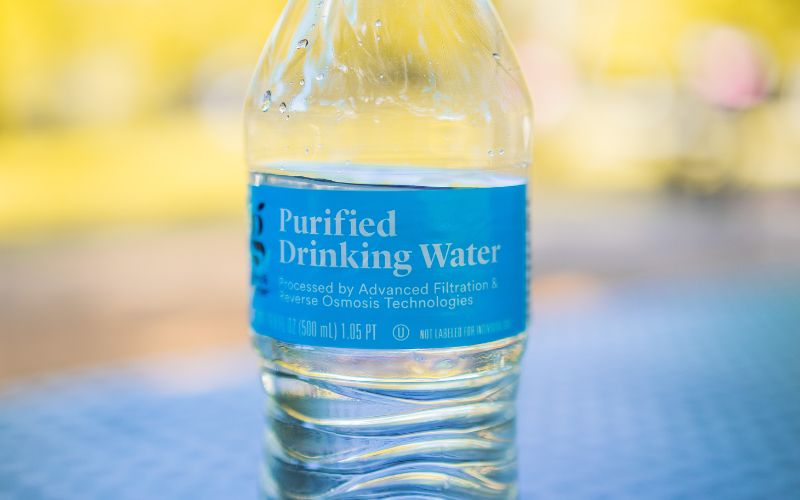
We’ve been drinking water out of plastic bottles for decades.
Now we’re talking about microplastics like they were always obvious.
That doesn’t make me want to panic. It makes me want to look closer.
Because the real change is not fear. It’s trust.
What does “Safe Food” Mean in 2026?
Once trust shifts, you start reading labels differently. You start asking who is responsible for proving something is safe. You start noticing how often “safe” gets treated like a settled question when it’s really an ongoing process.
So what are the chef tips for food safety at home. What are we actually trusting here.
The end of “trust us” is now official
This month, the FDA announced it is launching an assessment of BHA, a food preservative that has been around long enough to feel invisible.
In that same announcement, HHS Secretary Robert F. Kennedy Jr. said, “This reassessment marks the end of the ‘trust us’ era in food safety.”
That sentence matters because it describes the moment we’re in.
Not “everything is dangerous.”
More like: the old default, that something is fine because it’s been used for years, is no longer good enough.
The FDA is also blunt about why BHA is on the table. The agency notes it has remained in the food supply for decades, even as the National Toxicology Program has identified it as “reasonably anticipated to be a human carcinogen” based on animal studies.
This is what modern oversight looks like. A reassessment. New data. Updated standards. More scrutiny after the fact.
And it’s not just one chemical. It’s a signal that the “we decided this years ago” era is getting audited.
GRAS is not a kitchen word, but it matters
Most home cooks never need to know what GRAS means.
GRAS stands for generally recognized as safe. It’s the classification that shows up behind the scenes when ingredients get treated as acceptable before most people even notice they exist.
Right now, that system is back in the spotlight. Reuters reported that Kennedy told CBS, “We will act on David Kessler’s petition,” referring to a request to remove corn syrup and dozens of other sweeteners and starches from the GRAS list unless safety can be proven.
Again, politics aside, the practical question is simple.
Who has to prove something is safe?
And when?
Here’s the part that matters for the future, and it’s not a talking point. It’s in the FDA’s own 2026 priorities. The Human Foods Program says that in 2026 it will publish a proposed regulation to require submission to FDA of GRAS notices for all new substances claimed to be GRAS.
If that happens, it is a shift from “trust us, we looked at it” to “show us.”
The calm part people miss
When you start writing about safety, it’s easy to accidentally sound like a warning label.
I don’t want that tone.
The FDA’s microplastics page includes a sentence that should keep everyone grounded: “Current scientific evidence does not demonstrate that levels of microplastics or nanoplastics detected in foods pose a risk to human health.”
That’s not the agency dismissing the topic. It’s the agency naming the current state of the science.
This is how you stay calm while staying aware of what is happening in the food sphere. You can take the scrutiny seriously without turning dinner into panic.
What this means from the other side of the stove
When regulators talk about reassessments and exposure data, I translate it into three things kitchens understand immediately:
More testing and more documentation.
We should want more pressure on brands that can’t explain their supply chain or their ingredient decisions.
And yes, in the long run, that can change what shows up in the grocery store and how it gets priced.
But in the short run, it changes something simpler. How you choose.
What cooks do with this
I don’t want people eating scared.
What I want is people eating aware.
I still cook the same way I always have but now I read a little more closely now.
That means I pay attention to ingredient panels on the things that quietly sneak into your week: snacks, sauces, cereals, convenience meals. I rotate my shortcuts instead of living on the same ones. I buy from companies that are not allergic to transparency.
Not because I’m trying to be perfect.
Because “safe” is not a slogan. It’s a system. And systems change.
A calm way to end this
The change isn’t that food suddenly became scary.
The change is that trust isn’t automatic anymore and frankly that is the scary part.
So I read the label and then I read it again.
Then I cook.
Chef Alexis Hernandez writes The Other Side of the Stove. His work has also appeared in News of Sun City Center, and he has appeared on Food Network Star and Cutthroat Kitchen.